How AI is expanding what's possible in chiller plant optimization, one operating decision at a time
Artificial intelligence (AI) has entered the chiller plant, and it's walking into one of the smartest rooms in the building: the mechanical room.
This room is no rookie, it’s already running on sophisticated controls, carefully engineered sequences, and operators who know exactly which pump makes that noise when something isn't right. Engineers were designing plants to respond to changing loads and orchestrate equipment operation long before autonomous optimization joined the conversation. And that’s exactly the foundation AI thrives on.
When the variables outgrow the rules
Today's rule-based controls can do a lot, but most are built around predefined responses: if X happens, do Y. Sounds straightforward enough until X has to factor in weather, occupancy, building load, equipment efficiency, energy prices, several chillers, pumps, and cooling towers. We could go on; the plant certainly does.
Eventually, writing a rule for every combination becomes impractical. This is where AI starts earning its seat in the mechanical room.
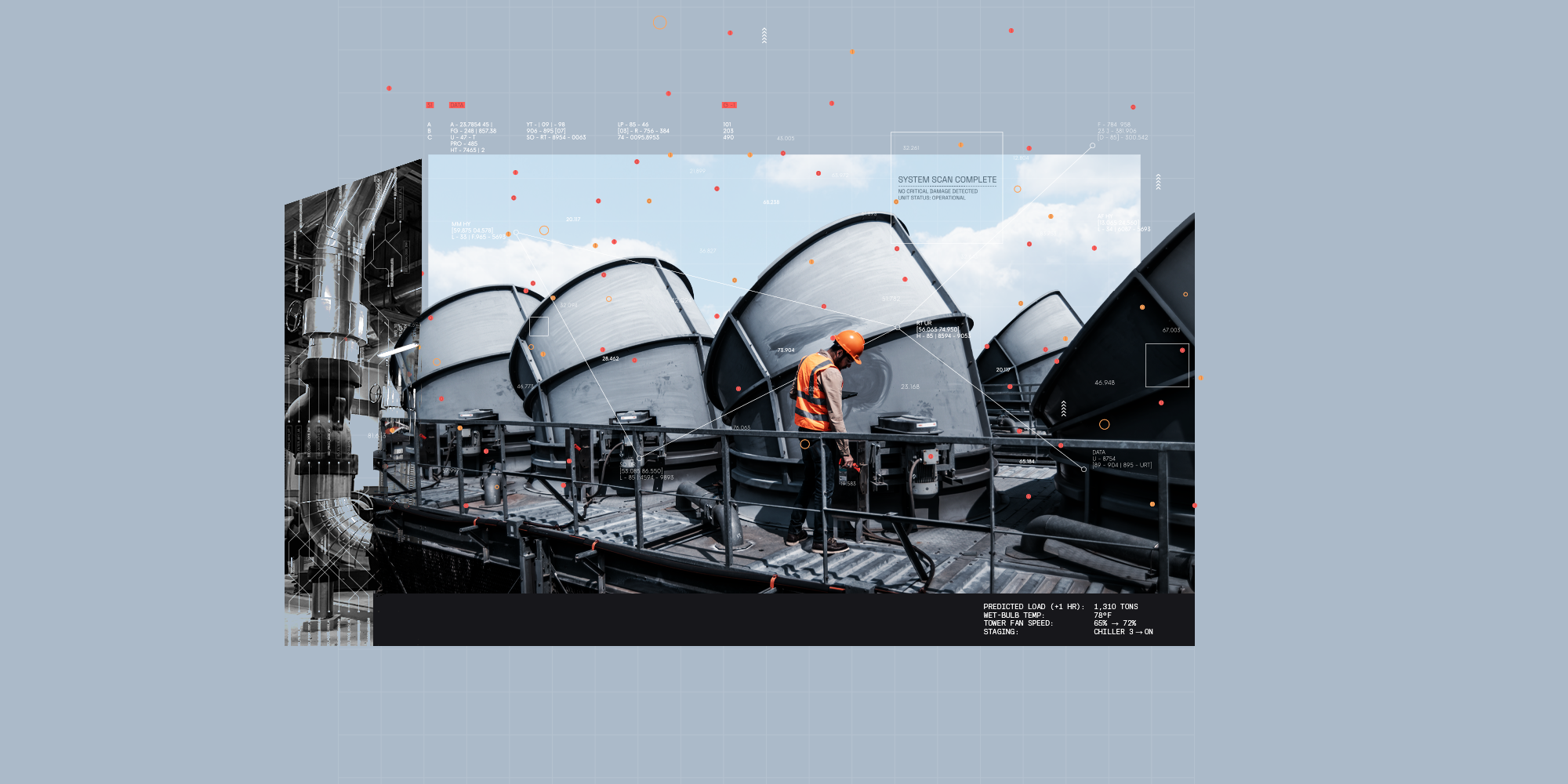
Machine learning (ML), a subfield of AI that learns patterns from data, can build on existing control logic to help anticipate what‘s likely to happen next. By forecasting plant load and return-water temperature, for example, these models can inform decisions about chiller staging, pump setpoints, cooling tower operation, and thermal storage.
That foresight becomes especially useful when you consider how closely the equipment in a chiller plant works together. Improving one chiller's efficiency could make a cooling tower work harder, while changing a pump setpoint can have ripple effects elsewhere. AI weighs these interactions together to identify strategies that improve performance across the whole plant instead of one piece of equipment at a time.
Good intelligence starts with good information
Even a well-controlled plant can leave important parts of its performance hard to see. For AI, those gaps are critical.
Accurate flow, temperature, and power measurements are the starting point. Equipment-level visibility, consistent tagging, aligned timestamps, and historical data fill in the rest. Connect those measurements with external factors like weather, energy prices, and utility demand charges, and AI can help evaluate plant performance alongside the cost of operating it.
That same data can also reveal unusual equipment behavior, helping operators identify when a chiller or pump might need attention before a minor issue becomes a bigger one.
Meeting today’s operating requirements is the baseline. For engineers designing or modernizing chiller plants, the bigger question is how much the plant will be able to tell you tomorrow. The more it can tell you, the more AI can do with it.
The opportunity is bigger than smarter controls. It’s giving the people who know these plants best more information to make every operating decision count. And perhaps that’s the most promising part: building on decades of engineering intelligence, one adjustment at a time.
Want to see how AI fits into the chiller plants you're designing today? Watch the Trane and BrainBox AI webinar, Chiller Plant Modernization: Building a Foundation for AI Optimization, for a closer look at preparing plants for advanced optimization.